The Biopic Mistake: Treating a Life as a Complete Record
A biopic is a shaped interpretation, not a complete record. Use these viewing questions to spot what its scenes emphasise, compress or leave out.
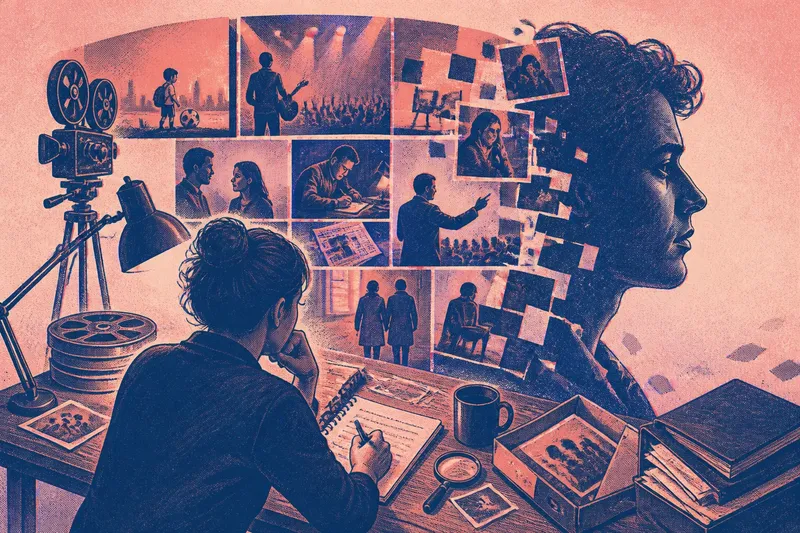
A biopic is a shaped interpretation, not a complete record, and noticing that difference can change how you watch one. The biopic mistake is to let a coherent run of scenes stand in for an entire life, as though every turning point had been preserved in order. A film can make a persuasive argument about a person while still selecting, compressing and rearranging events.
That does not make dramatisation dishonest by definition. A screen story needs scenes, conflict and an ending; a life contains stretches that resist all three. The useful question is not simply “Is this true?” but “What view of this person does the film build, and what would I need to know before treating that view as a full account?”
Why can a biopic feel like a complete record?
Films give scattered events a visible shape. A childhood moment may appear to explain a later decision; a public triumph may lead straight into a private crisis. Cause and effect become easy to follow because the screenplay has chosen which moments belong beside one another.
That arrangement can create an impression of inevitability. Once an ending is known, earlier scenes may seem to point towards it, even if a person’s life offered several possible paths at the time. A biopic is a little like a carefully arranged mantelpiece: what you see may be real, but the arrangement is still someone’s choice.
Look, too, at how the film handles time. A long relationship might be represented by a handful of encounters; several arguments may become one confrontation. This compression helps a story move, but it can also turn a complicated relationship into a neat cause of success or failure.
What choices shape the story on screen?
Selection begins before the first scene. A filmmaker decides whose point of view anchors the story, which period receives attention and what counts as the central conflict. Those choices influence what the audience understands, even when individual scenes are based on documented events.
Pay attention to these features as the film unfolds:
- The opening: Does it begin with childhood, a public achievement or a crisis? Each starting point frames the life differently.
- The turning points: Which decisions receive a full scene, and which are mentioned only in passing?
- The supporting cast: Do friends, colleagues and relatives have distinct motives, or do they mainly explain the central figure?
- The ending: Does the film stop at a public milestone, a personal resolution or a convenient point of closure?
- The absence: Which subjects, relationships or periods seem relevant but receive little attention?
These are not a scorecard for judging a film. They help identify the kind of account it offers. A story centred on a creative breakthrough, for instance, may devote little room to ordinary work, private loyalties or the experiences of people around the artist.
How can you separate drama from a fuller account?
After a scene that seems to explain everything, pause on what the film has actually shown. Did you witness a choice, hear one character’s version, or receive a confident explanation from the screenplay? Those are different kinds of evidence within the story itself.
Say you watch an invented biopic in which a singer leaves a small band after one heated rehearsal. The scene makes the departure feel like a single, decisive break. To read it carefully, ask what the film shows before and after: was there an ongoing disagreement, another opportunity, or a practical pressure that never appears on screen? The observable result is not a verdict about what “really” happened; it is a clearer understanding of how the film has concentrated the conflict.
When you want to check a claim beyond the film, seek accounts that can clarify the specific point, such as a well-sourced biography, an interview or an archive description. Compare how each source presents its evidence, and notice when accounts disagree. One source will not automatically settle every question, but comparison can show where the film has made a firm dramatic choice.
What questions should you ask after a biopic?
Which events does the film treat as decisive?
List the moments the plot presents as causes of later change. Then consider whether the film gives other possible causes or paths comparable attention.
Whose perspective is missing?
Notice who gets to describe events and who appears only through another character’s account. A missing viewpoint can leave even a carefully made drama partial.
Where has the film compressed time?
Watch for sudden changes in relationships, careers or beliefs that follow a brief scene. Compression can be useful storytelling, but it may make gradual change look instant.
What does the ending leave unresolved?
Ask whether the final scene closes a dramatic arc or implies that the person’s whole life has been explained. An ending can offer emotional resolution without providing a complete account.
How should you describe what the film tells you?
Use precise language. “The film portrays the decision as a break with the band” is more careful than “The decision ended the band.” The first sentence describes the screen story; the second makes a broader claim that may require evidence outside it.
You can also distinguish between established events and interpretation. A film may depict a meeting, then give that meeting a particular emotional meaning. Even if the encounter took place, the dialogue, timing and reactions may have been shaped for dramatic clarity. Treating the scene as an interpretation does not dismiss it; it helps you say what kind of knowledge it offers.
When discussing a biopic, keep track of the difference between a person’s life, the evidence available about it and the version organised for the screen. The biopic mistake is not enjoying a satisfying arc. It is forgetting that an arc has an authorial shape—and that the details outside the frame may alter what the visible scenes mean.