A Watch Party Built Around One Screen Convention
Plan a watch party around one screen convention, with two short examples, a simple comparison and room for guests who have never studied film.
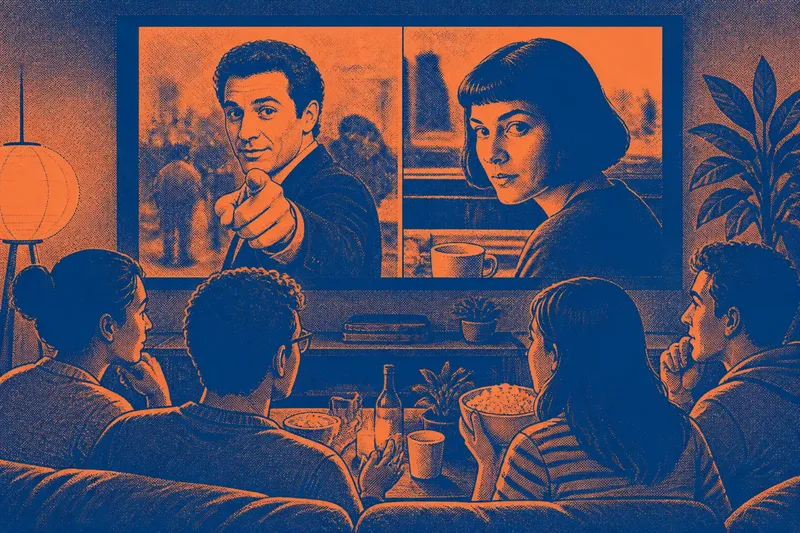
A watch party built around one screen convention gives guests something specific to notice without turning the evening into a film class. Choose two short scenes that use the same device—such as a character looking directly into the camera—and compare what that choice does in each. The shared feature makes conversation easy; the different effect keeps it interesting.
The best convention is one people can spot on first viewing. It might be a freeze-frame, a voice-over, a repeated entrance, a split screen or a shot that hides part of the action. Pick a device with a clear visual or sound cue, then match two excerpts that use it differently. Your guests do not need to know technical terms or the full stories.
Which kind of gathering are you planning?
Start with the people and the mood, not a list of films. A quiet evening with close friends can support a more reflective comparison; a mixed group may prefer a comic or instantly recognisable device. The right choice is the one that gives everyone a way into the discussion.
- For guests who rarely watch films together: choose a convention that is obvious on screen, such as a character breaking the fourth wall. It gives newcomers a simple point to notice, and experienced viewers can still discuss why the moment feels playful, intimate or unsettling.
- For a lively, chatty group: consider a repeated entrance, a recurring sound cue or a running visual gag. These conventions invite quick reactions and do not require guests to remember complicated plot details.
- For a quieter, more thoughtful evening: use voice-over, silence or an off-screen presence. These choices can lead to a richer conversation about what the audience is allowed to know, though they work best when the excerpts are brief and self-contained.
- For a group with mixed ages or tastes: choose a broad device, then select examples with different tones. A split screen, for instance, can be used for comedy in one scene and suspense in another.
- For guests who enjoy making things: pick a convention that can be sketched or acted out, such as a repeated entrance or a freeze-frame. A low-pressure creative activity can follow the viewing, but it need not become the main event.
If you are unsure, favour a convention that can be described in one plain sentence. “The character speaks to the audience” is easier to carry into the room than a technical label. Like comparing two postcards, you are looking at the same format to see how different choices change the impression.
How do you choose a convention that works?
Look for a feature that is easy to identify and substantial enough to discuss. A convention is a familiar screen choice, not necessarily a rule. It may be a technique used in one genre, a storytelling habit, or a recurring way of staging a scene. The point is to choose one thread and follow it, rather than trying to explain everything happening in either excerpt.
Some useful options include:
- Direct address: a character looks at or speaks to the camera. Ask whether the moment feels like a confidence, a joke or a challenge.
- Voice-over: a voice speaks over images. Compare whether it adds context, contradicts what you see or leaves something out.
- Freeze-frame: the moving image stops on a particular moment. Notice whether the pause makes the scene feel comic, dramatic or reflective.
- Split screen: two images appear at once. Consider whether the layout creates a comparison, a race against time or a sense of distance.
- Repeated entrance: a character arrives in a similar way more than once. Look for a change in timing, reaction or mood.
- Off-screen action: something important happens outside the visible frame. Discuss how sound, expressions or reactions guide your imagination.
Choose a device that both excerpts use clearly, but not identically. If the scenes are too similar, the comparison may end after a quick observation. If they share only a vague resemblance, guests may spend the evening debating whether they belong together. Aim for a visible common feature and a meaningful difference in tone, timing or purpose.
What makes two excerpts a useful pair?
Each excerpt should make sense without a long plot explanation. A short scene with a clear beginning and end is easier to show than a passage that depends on several earlier scenes. Give just enough context for viewers to understand who is present and what is at stake, then let the convention speak for itself.
Say you choose direct address. One excerpt might show a character turning towards the camera after delivering a joke; the other could show someone using the same gaze to share a private worry. Before playing them, tell guests only that both scenes break the usual boundary between character and viewer. Afterward, ask what each look seemed to invite: laughter, trust, discomfort or something else. The same convention becomes a useful comparison because the scenes give it different emotional work.
Think about length as well as content. The extracts should be short enough to hold attention and long enough to show the convention in context. A scene needs room for its effect to land; a single isolated image may be too thin to discuss. If you are choosing from longer works, identify the relevant moment in advance and make sure you can play it smoothly.
Pairing across genres can add contrast, but it is not essential. A comic scene alongside a serious one may make the device’s range obvious. Two scenes from different periods or styles can also prompt questions about changing audience expectations, provided the comparison stays focused on the convention rather than becoming a general history lesson.
How should you introduce the viewing?
Keep the opening explanation brief. Name the convention in everyday language, say what to watch for and remind people that there is no required interpretation. Avoid giving away the scene’s punchline or emotional turn. When viewers know exactly what to feel, they have less room to notice their own response.
A simple sequence keeps the occasion relaxed:
- Welcome everyone and explain the one screen convention you have chosen.
- Introduce the first excerpt with only the context needed to follow it.
- Play the scene without pausing to comment.
- Ask for immediate impressions before sharing your own reading.
- Introduce and play the second excerpt in the same way.
- Compare what the convention does in each, then leave space for other reactions.
Give guests a question they can answer from what they saw. “What did the look at the camera do here?” is more inviting than “What is the director’s theory?” If someone notices an unexpected detail, follow it. The plan is a guide, not a test with a correct answer.
For an online gathering, send the viewing links or files beforehand and agree on a start time. Check that everyone can access the material, and keep the discussion channel simple: a group call is usually enough. For an in-person evening, arrange the seating so the screen is easy to see, and leave a little space for conversation between excerpts.
What questions help the conversation?
What should guests notice first?
Ask what caught their attention before naming a formal interpretation. A glance, pause, sound or change in pace gives people a concrete place to begin, even if they have never discussed screen technique.
How can you compare the two scenes?
Ask what stays the same and what changes: the timing, the character’s expression, the surrounding action or the mood. This keeps the comparison anchored in visible choices rather than a guess about what the filmmakers intended.
What if someone does not like one excerpt?
Invite them to explain what did not work for them, then ask whether the convention contributed to that reaction. Disagreement is useful when it stays curious; nobody has to admire a scene to say something perceptive about it.
How do you avoid turning the evening into a lecture?
Let guests speak before offering background, and keep any explanation tied to the scene in front of you. If a historical or genre detail becomes a separate subject, note it for another time rather than asking the group to absorb a full lesson.
What practical details are worth settling?
Choose excerpts you can access and play reliably. Check the sound, subtitles and screen framing before guests arrive, especially if dialogue or a small visual detail carries the convention. If a clip needs a longer set-up, have a concise introduction ready rather than playing several minutes of unrelated material.
Be considerate about tone and content. A scene that includes violence, distressing themes or language may not suit every gathering, even if it is a strong example of the device. Tell guests in advance if material could be uncomfortable, and offer an easy way to skip an excerpt or step away. For any screening outside a private social setting, check the relevant permissions and local rules rather than assuming a personal streaming account covers public use.
Plan a gentle finish. You might invite each guest to name the more memorable use of the convention, or ask whether the two scenes changed how they noticed it. There is no need to add another clip simply to fill the evening. A short, well-matched pair often leaves more room for people to talk than a long programme does.
How do you know the pairing is ready?
Before settling on the final pair, check that both scenes show the same convention plainly, that each excerpt can be understood with minimal context, and that the contrast is easy to describe without specialist vocabulary. If you struggle to explain the connection in a sentence, choose a clearer pair.
Keep the invitation modest: guests are coming to watch two scenes and notice one shared choice. That framing makes the occasion approachable without flattening the films into teaching material. A watch party built around one screen convention works best when the question is small enough to answer and open enough for everyone to bring a different response.
For a watch party built around one screen convention, the most useful final decision is often what to leave out. Skip the extra clip, the long biography and the search for a definitive interpretation. Two well-chosen scenes, a clear prompt and attentive company are enough to make a familiar screen habit feel newly visible.